
Table of Contents
TDS in California
What is a Transfer Disclosure Statement (TDS) in California? In California real estate law transactions, transparency is not just best practice — it is state law. The primary mechanism for ensuring buyers know exactly what they are purchasing is the Transfer Disclosure Statement (TDS).
As part of navigating broader California real estate law, California Civil Code Section 1102 mandates that sellers of residential properties comprising one to four units provide prospective buyers with a completed TDS.. This legally binding document outlines the current condition of the property and any known material facts that could affect its value or desirability. California Civil Code Section 1102
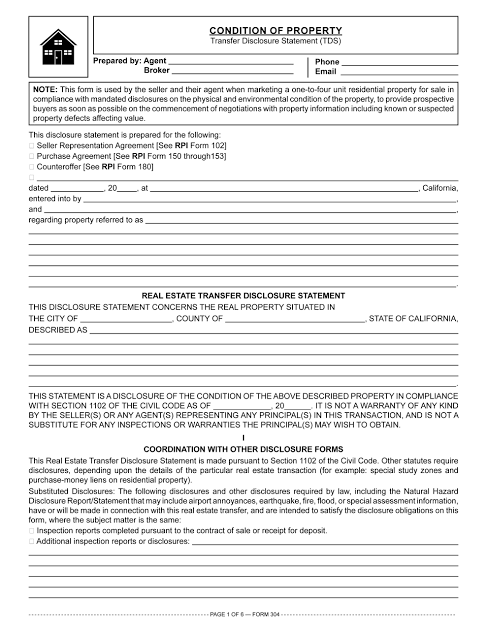
California Transfer Disclosure Statement. Source: first Tuesday Journal
What Must Be Disclosed?
The TDS is not a warranty, nor is it a substitute for an independent home inspection. Instead, it is a detailed questionnaire requiring the seller to disclose what they know about the property.
The form is broken down into three main sections:
1. Built-In Features and Appliances
The seller must check off which items the property currently possesses (e.g., dishwashers, pool heaters, smoke detectors, sprinkler systems) and state whether they are in operating condition.
2. Structural Integrity and Defects
Sellers must disclose any known significant defects or malfunctions in the property’s major systems and structural components. Common disclosures include:
- Roof leaks or damage
- Plumbing or electrical issues
- Foundation settling or cracking
- Issues with driveways, walls, or fences
3. Environmental and Neighborhood Factors
The seller must also disclose external issues that materially impact the property. This includes:
- Shared features (like a common driveway or joint fence) and any associated maintenance agreements
- Encroachments, easements, or boundary disputes
- Neighborhood noise, nuisances, or zoning violations
- Past flooding, drainage issues, or soil problems
- Unpermitted additions or alterations
Key Takeaway: The legal standard in California is “actual knowledge.” Sellers are not required to hire inspectors to find problems before selling, but they cannot legally conceal or fail to mention issues they are already aware of.
Exemptions to the TDS Requirement
While the TDS is required in the vast majority of standard residential sales, California law does provide specific exemptions. A seller does not have to provide a TDS in the following scenarios:
- Foreclosures and Bank-Owned (REO) Sales: Lenders selling a property after foreclosure are generally exempt.
- Probate and Trust Sales: Fiduciaries (like trustees or executors) administering an estate are exempt, provided they have not personally occupied the property within the preceding year.
- Transfers Between Co-Owners or Spouses: Transfers resulting from a divorce decree or between existing joint owners do not require a TDS.
- New Construction: Builders selling newly constructed homes in a subdivision often use alternative, specific developer disclosures instead of the standard TDS.
The Buyer’s Right to Cancel
The timing of the TDS delivery is critical. Because the document contains material facts about the property’s condition, the buyer has a statutory right to review it and potentially cancel the transaction.
- If the TDS is provided in person, the buyer has three days from the date of delivery to terminate the purchase agreement in writing and receive their earnest money deposit back.
- If the TDS is provided by mail or electronically, the buyer has five days from the date of delivery to cancel.
Because of this cancellation window, it is highly recommended that sellers complete the TDS prior to listing the property and provide it to buyers before or concurrently with signing the purchase agreement, thereby eliminating the statutory cancellation period. To further protect your earnest deposit during inspection reviews, make sure you understand how California real estate contingencies function.
The Risks of Failing to Disclose
A seller who intentionally conceals a known defect or fails to provide a TDS faces significant legal liability. If a buyer discovers an undisclosed issue after the close of escrow, they can sue the seller for actual damages (the cost of repairing the defect) and, in cases of outright fraud, punitive damages.
(Disclaimer: The information provided on this website does not, and is not intended to, constitute legal advice; instead, all information, content, and materials available on this site are for general informational purposes only. Readers should contact a licensed California real estate attorney to obtain advice with respect to any particular legal matter.)