
Table of Contents
A Guide to Understanding Strict Liability in Animal Attack Claims
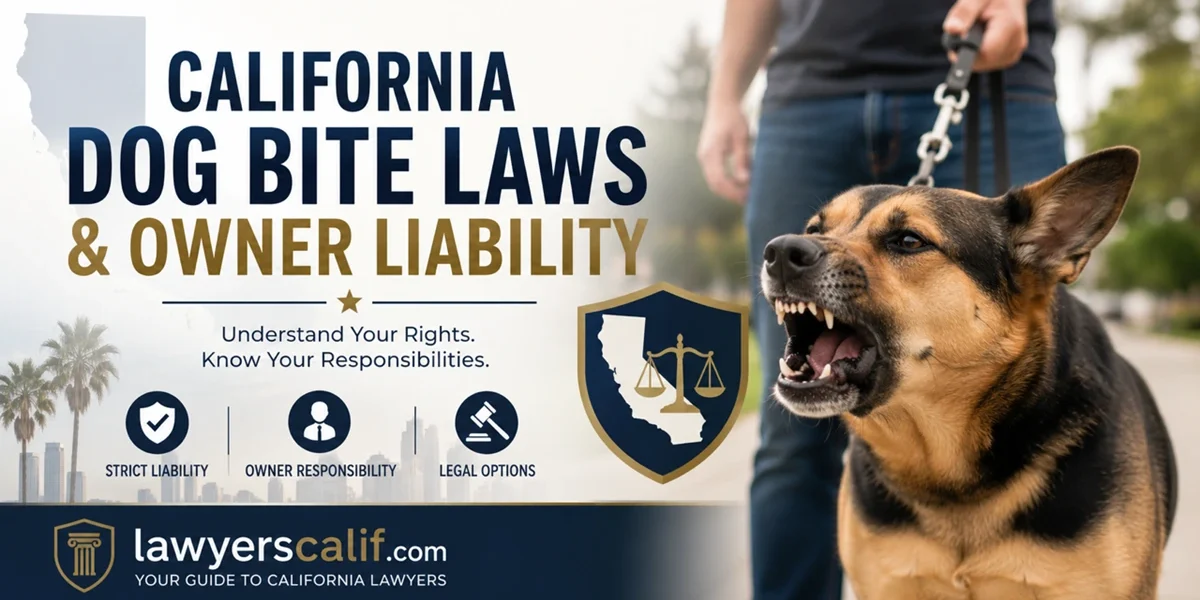
California Dog Bite Laws & Owner Liability – An animal attack is a deeply traumatic event that can leave a victim with severe physical injuries, permanent scarring, and long-term emotional distress. When a dog bite occurs, navigating the aftermath requires a clear understanding of your legal rights. If you are injured by a dog in the Golden State, you are protected by some of the most victim-friendly statutes in the country. Unlike many states that shield owners from initial incidents, California holds dog owners to an incredibly high legal standard. This comprehensive guide of California Dog Bite Laws & Owner Liability breaks down how civil law dictates owner liability, the critical difference between strict liability and negligence, and what steps you need to take to protect your right to compensation.
1. California’s Strict Liability Dog Bite Statute
The core of California’s approach to animal attacks is found in California Civil Code Section 3342. This statute establishes a standard of strict liability for dog owners. As explored in our detailed breakdown of Understanding Strict Liability vs. Negligence in California, a strict liability standard means that the victim does not have to prove that the owner acted carelessly or failed to restrain the animal. Under Section 3342, a dog owner is legally responsible for the damages caused by their dog if two primary conditions are met:
- The injury was caused by a dog bite: The law specifically covers bites. It is worth noting that the skin does not necessarily have to be punctured for a court to consider an action a “bite,” though the mechanism of injury must involve the dog’s jaws.
- The victim was in a public place or lawfully in a private place: You are considered lawfully on private property if you are performing a duty imposed by law (such as delivering mail) or if you were explicitly or implicitly invited onto the property by the owner.
The Death of the “One-Bite Rule”
Many states sti l utilize what is commonly known as the “one-bite rule.” In those jurisdictions, a dog owner is generally not held liable for a bite unless the dog has previously bitten someone or shown a known history of vicious tendencies. Essentially, the owner gets a “free pass” for the first incident. California does not recognize the one-bite rule. An owner can be held 100% liable the very first time their dog exhibits aggressive behavior, even if the animal has spent its entire life acting as a gentle family pet.
2. When Does Standard Negligence Apply to Dog
Injuries?
While Civil Code Section 3342 is incredibly powerful, it has a specific limitation: it applies strictly to bites. Dogs can cause severe injuries without ever opening their mouths. For example, if a large, enthusiastic golden retriever jumps on an elderly pedestrian and knocks them to the concrete, causing a broken hip, Section 3342 does not apply. In non-bite scenarios, a victim can still recover compensation by building a claim based on traditional negligence. To win a negligence-based animal injury claim, you must demonstrate that the owner failed to exercise reasonable care in controlling their animal. This foundational legal pathway is a core component of the broader civil framework outlined in our pilar guide, Personal Injury Law in California.
California Leash Laws and Negligence Per Se
Proving negligence becomes significantly easier if the owner was violating a local ordinance at the time of the injury. Most cities and counties throughout California enforce strict leash laws. If an owner allows their dog to run off-leash in a public area where leashes are legally mandated, and that dog causes an injury, the doctrine of negligence per se may apply. Under this rule, the court presumes the owner acted negligently because they violated a public safety law designed to prevent exactly that type of harm.
3. Common Defenses in California Dog Bite Cases
Because California’s strict liability laws heavily favor the victim, insurance companies and defense lawyers will aggressively look for specific exceptions to escape liability. The most common legal defenses used against dog bite claims include:
- Trespassing: If you were on private property ilegaly without an invitation or legal duty at the time of the bite, the strict liability statute does not protect you.
- Provocation: If you tormented, abused, kicked, or intentionally provoked the dog, the owner can argue that the animal acted in self-defense.
- Assumption of Risk: This defense frequently applies to professionals who work with animals, such as veterinarians, dog groomers, or kennel workers. Under the “veterinarian’s rule,” these professionals generally assume the risk of being bitten as a standard hazard of their occupation.
Even if an owner attempts to shift the blame to you, California’s victim-friendly shared-fault landscape ensures you may not be entirely barred from financial recovery. To see how these defense tactics interact with your final compensation payout, review our resource on How Pure Comparative Fault Impacts California Accident Claims.
4. Crucial Steps to Take Immediately Following a Dog Bite
If you or a family member has been attacked by a dog, taking the following steps is critical for both your physical well-being and your potential legal claim:
- Seek Immediate Medical Attention: Dog bites carry an exceptionally high risk of infection due to bacteria in the animal’s saliva. Medical records also serve as foundational evidence linking the attack directly to your injuries.
- Identify the Owner and Witness Contact Info: Exchange names, phone numbers, and address details with the dog owner. If anyone witnessed the attack, secure their statements and contact information immediately.
- Photograph Everything: Take clear, detailed photographs of your injuries before and after receiving medical treatment. Additionally, photograph the location of the attack and the dog itself if possible.
- File a Report with Local Animal Control: Report the incident to your local county or city animal control agency. They will document the event, verify whether the animal is up-to-date on its rabies vaccinations, and quarantine the dog if necessary. This official report is vital evidence for your claim.
Partner with an Experienced California Legal Advocate
Filing a dog bite claim usua ly means negotiating directly with the homeowner’s or renter’s insurance policy of the dog owner. Insurance adjusters are notorious for trying to minimize payouts by claiming the victim provoked the animal or was trespassing.
You do not have to fight these lowbal tactics alone. Navigating the intersection of strict liability, local leash laws, and insurance loopholes requires the guidance of a professional. Explore our trusted legal directory to connect with a highly qualified, verified personal injury lawyer in your local area today, and take the first step toward securing the compensation you deserve.